
Home | News Archive | January 2007
The "Hat Box PC"
January 27, 2007
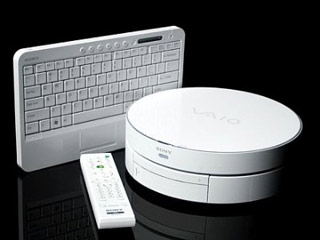
Sony's TP1 Media Center PC packs a Core 2 Duo, TV Tuner card, HDMI output, WiFi and all the usual computer gubbins into one convenient giant white hockey puck shaped unit. An optional and similarly cylindrical DT1 digital tuner can be stacked underneath to record and stream telly at 1080i around your home network. The whole unit measures 270mm in diameter and sadly almost certainly doesn't contain a circular motherboard. We rather like the look of the TP1 here at Mini-ITX, but then of course we would.

Gallery of things we think look a bit like the Sony TP1
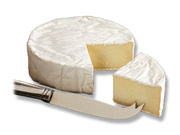
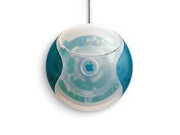



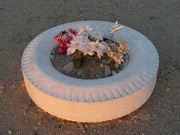

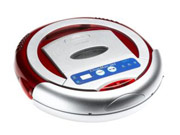
At this point we got bored. Please feel free to send in more.
 Permalink | mini-link Permalink | mini-link |
More EPIA PX Pictures
January 26, 2007
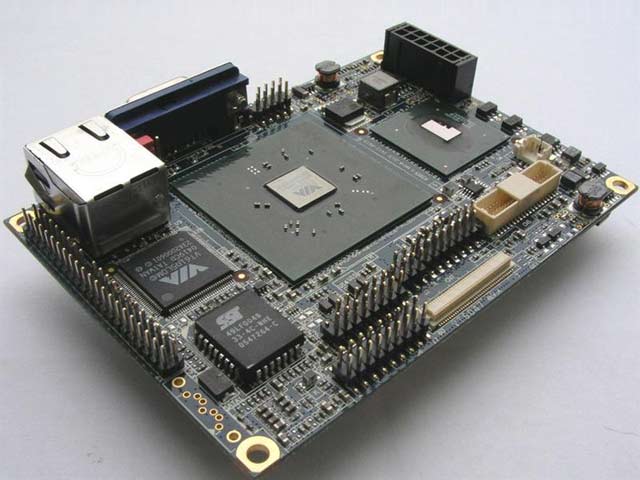
VIA have released more teaser pictures of their EPIA PX Pico-ITX board prototype, this time showing the board in all its glory without an enclosure.
VIA are no strangers to tiny motherboards. Many current 90 x 96mm PC/104+ and 146 x 101mm EBX 3.5in embedded boards already use VIA chipsets, and VIA already have their 120 x 120mm Nano-ITX boards. The EPIA PX measures 100 x 72mm. As with the EPIA NL Nano-ITX boards, all the connectors apart from Ethernet and VGA connect using pin headers due to physical limitations at this size.
The slightly unfinished looking heat spreader covering most of the top of the board in the final picture is interesting. This appears to be one half of a larger finned cooling arrangement - the top half mounting through 3 threaded hollow standoffs or screwing directly into the heat spreader. Or perhaps the standoffs are to allow stacking, PC/104 style. VIA rarely release photos of their boards with the full heatsink attached.
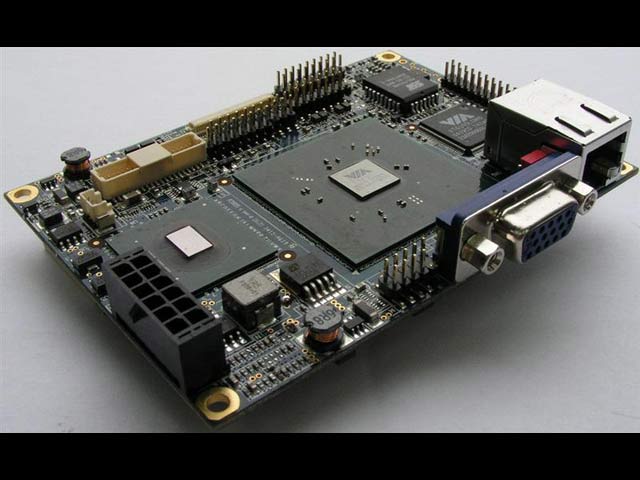
From the front
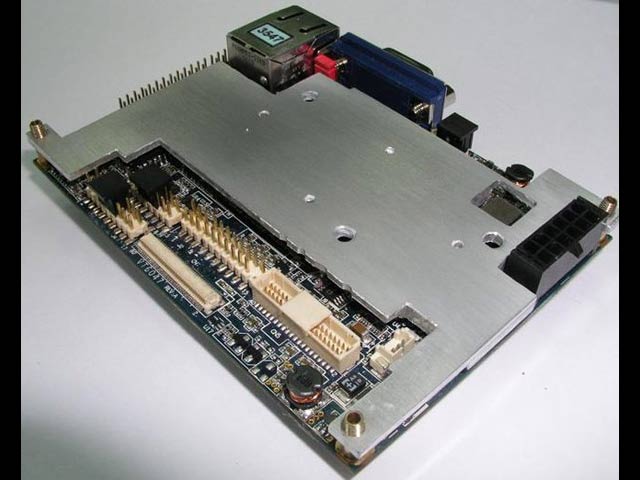
With heat spreader
No further specifications are clearer at this stage. This is what we currently know.
| Permalink | mini-link |
The "ITX-Laptop"
January 19, 2007
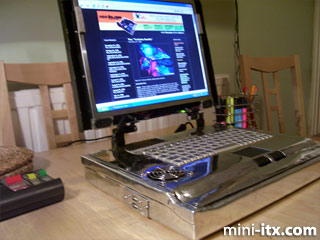
Torquil Harkness disappeared into his shed armed with a bundle of components, an angle grinder and mig welder and emerged several days later with his very own fully upgradable 2.0GHz Mini-ITX powered aluminium laptop. When he told the store what he was going to do we didn't quite believe him. We do now Torquil.
The next version will have SATA RAID.
Torquil Harkness' "ITX-Laptop"
| Permalink | mini-link |
VIA demonstrate EPIA PX at CES
January 18, 2007
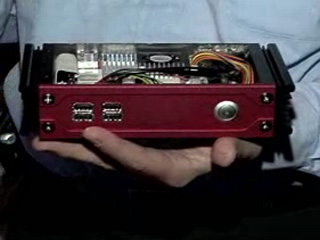
VIA demonstrated a new size of EPIA motherboard at CES this year measuring just 100 x 72mm - the Pico-ITX. The prototype EPIA PX was powered by a 1GHz C7 CPU and an unnamed chipset with Unichrome Pro II functionality, making it both smaller and potentially slightly faster than current 120 x 120mm Nano-ITX boards.
It's unclear when the Pico-ITX will make an appearance but when it does VIA hopes it will be incorporated inside places such as vehicles, wireless or even skype devices.
Due to the small size most I/O will require cables attached to pin headers. Provisional specifications are: 1x DDR2 SODIMM socket; IDE; SATA; VT6106S 10x100 LAN with RJ45 socket; VGA socket; VT1708A Audio; 4x USB 2.0; COM; PS2; LVDS/DVI; TV output headers.
VIA's Alp Sezen chatted about the 3 VIA form factors for their official press blog. The EPIA PX makes an appearance about 2 minutes in:
| Permalink | mini-link |
AMD's Mini-DTX Form Factor
January 18, 2007
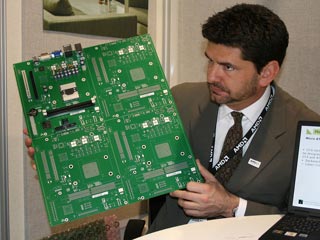
AMD have announced a new DTX platform and with it, Mini-DTX. Both platforms will be open standards, and not limited to AMD chipsets and processors. Of particular interest to us is the Mini-DTX platform which has a board size of 200 x 170mm, which may give room for an additional expansion slot compared to the single slot limitation of the 170 x 170mm Mini-ITX platform.
The rest of AMD's press release is standard stuff: low TDP (Thermal Design Power) processors; backwards mounting point compatibility with ATX enclosures; reduced noise, energy costs, size and heat will all sound very familiar (and worthwhile) to regular readers of this site.
Intel's BTX, Micro-BTX and Pico-BTX standards have been met with tepid enthusiasm in the marketplace since they were introduced a couple of years ago. Rigid specifications for component placement and cooling were impractical for AMD solutions, and consumers and manufacturers alike failed to see any real benefits. Whether the world is ready for another small form factor standard remains to be seen - the majority of small form factor PCs are built around proprietary board sizes, and a lot can be crammed onto a Mini-ITX board.
Note: we couldn't find a picture of a Mini-DTX. So we used a picture of AMD's David Schwarzbach holding a PCB panel containing four DTX boards.
| Permalink | mini-link |
VIA's EPIA EX almost here?
January 17, 2007
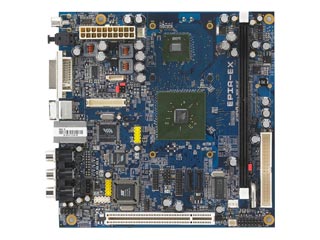
VIA Technologies are moving closer to releasing their EPIA EX Mini-ITX motherboard. The EPIA EX was first spotted in June 2006 and hinted at during CeBIT 3 months previously. Starter kits were up for grabs to registered developers back in November and an official announcement was made at the end of December.
Two versions will be available, the EPIA EX15000G powered by a 1.5GHz C7 processor and a fanless version powered by a 1.0GHz C7 Eden processor. If you can buy enough of them, VIA will stick a Gigabit LAN in place of the standard 10/100.
The usual suspect board back panel outputs are bolstered by DVI, optical audio and component video connections (though no HDMI) - VIA are targetting the EX at the x86 consumer electronics market and hope to see it in lots of devices from small to medium sized manufacturers looking to reduce their development costs and time to market.
The CX700M2 chipset is of most interest - the UniChrome Pro II 2D/3D graphics core promises hardware decoding acceleration of MPEG-2/-4 and WMV9 video, HDTV output up to 1080i and multi-channel HD audio. The CX700M2 chipset follows on from where the CN700 left off and at first glance appears to be broadly similar to Intel's recent mobile chipsets in capabilities. Let's hope VIA can offer software developers enough support to get these features utilised.
VIA Epia EX Motherboard Specifications
| Permalink | mini-link |
 |
 |
 |
Quick Links
Mailing Lists:
Mini-ITX Store
Projects:
Show Random
Accordion-ITX
Aircraft Carrier
Ambulator 1
AMD Case
Ammo Box
Ammo Tux
AmmoLAN
amPC
Animal SNES
Atari 800 ITX
Attache Server
Aunt Hagar's Mini-ITX
Bantam PC
BBC ITX B
Bender PC
Biscuit Tin PC
Blue Plate
BlueBox
BMW PC
Borg Appliance
Briefcase PC
Bubbacomp
C1541 Disk Drive
C64 @ 933MHz
CardboardCube
CAUV 2008
CBM ITX-64
Coelacanth-PC
Cool Cube
Deco Box
Devilcat
DOS Head Unit
Dreamcast PC
E.T.PC
Eden VAX
EdenStation IPX
Encyclomedia
Falcon-ITX
Florian
Frame
FS-RouterSwitch
G4 Cube PC
GasCan PC
Gingerbread
Gramaphone-ITX-HD
GTA-PC
Guitar PC
Guitar Workstation
Gumball PC
Hirschmann
HTPC
HTPC2
Humidor 64
Humidor CL
Humidor II
Humidor M
Humidor PC
Humidor V
I.C.E. Unit
i64XBOX
i-EPIA
iGrill
ITX Helmet
ITX TV
ITX-Laptop
Jeannie
Jukebox ITX
KiSA 444
K'nex ITX
Leela PC
Lego 0933 PC
Legobox
Log Cabin PC
Lunchbox PC
Mac-ITX
Manga Doll
Mantle Radio
Mediabox
Mega-ITX
Micro TV
Mini Falcon
Mini Mesh Box
Mini-Cluster
Mobile-BlackBox
Moo Cow Moo
Mr OMNI
NAS4Free
NESPC
OpenELEC
Osh Kosh
Pet ITX
Pictureframe PC
Playstation 2 PC
Playstation PC
Project NFF
PSU PC
Quiet Cubid
R2D2PC
Racing The Light
RadioSphere
Restomod TV
Robotica 2003
Rundfunker
SaturnPC
S-CUBE
SEGA-ITX
SpaceCase
SpacePanel
Spartan Bluebird
Spider Case
Supra-Server
Teddybear
Telefunken 2003
TERA-ITX
The Clock
ToAsTOr
Tortoise Beetle
Tux Server
Underwood No.5
Waffle Iron PC
Windows XP Box
Wraith SE/30
XBMC-ION